-
The House of Tomorrow
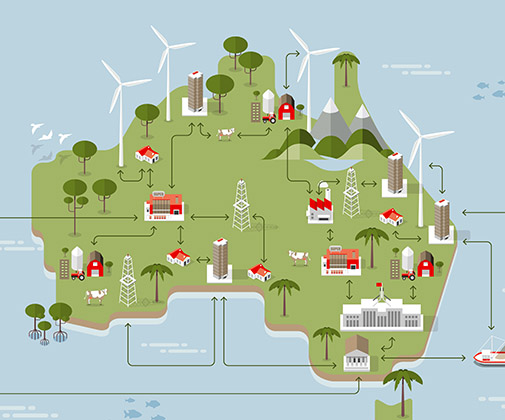
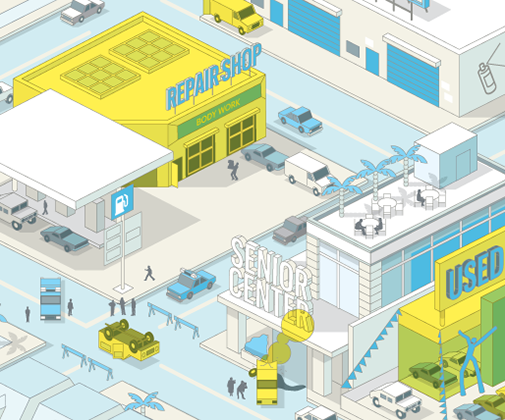
Fully automated homes are becoming a reality as security outfits and telcos look to boost profits and Wireless networking makes installation inexpensive and easy.
In the latest issue of Fortune Magazine. -
Guggenheim is flexing its $170 billion muscles
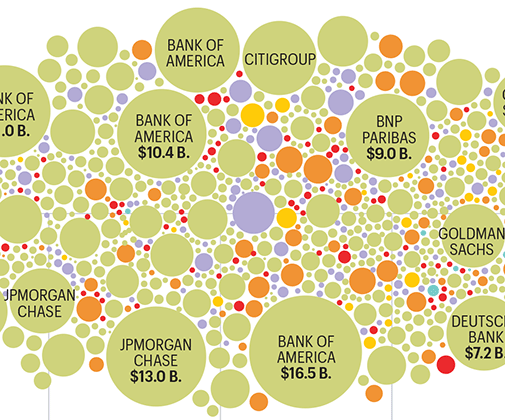
The secret is out: Guggenheim is a powerhouse on the prowl. What not that long ago was a small office overseeing a venerable family fortune has burgeoned into something much different and much bigger. Guggenheim now manages $170 billion for institutions, individuals, and insurance companies. It runs several hedge funds and an investment bank. Another part — the one that makes headlines — is akin to a private equity firm. It gathers investors on a deal-by-deal basis (rather than raising war chests that it can deploy over a period of years) to fund giant purchases such as the Dodgers.
-
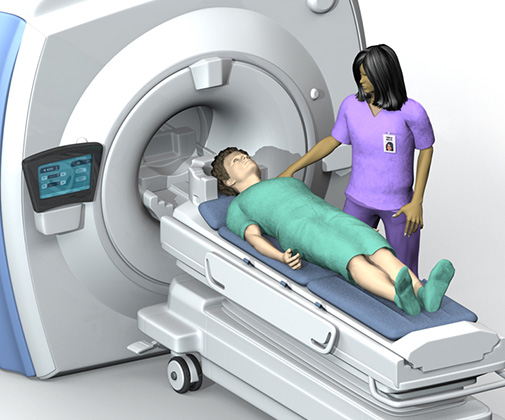
Meet your next surgeon
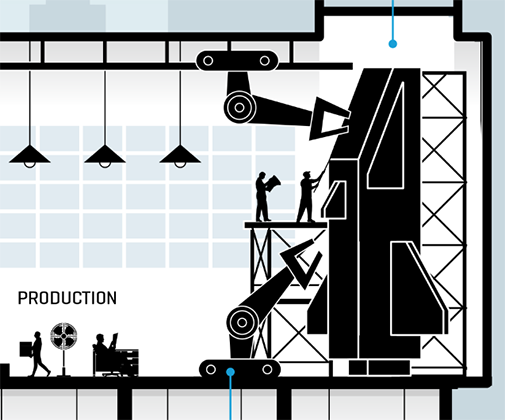
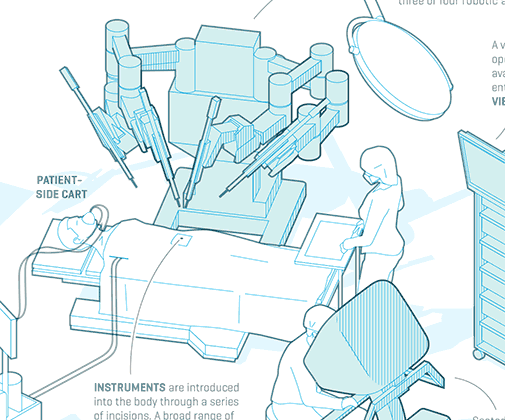
Advances in surgery usually attempt to ameliorate surgery’s essential nature: cutting someone to cure him. The less severe the tissue damage, the faster the patient heals—less time in recovery, less money spent recovering from the wounds. In health care this is known as “lowering the downstream costs,” and it is what is driving hospitals to invest $2 million a pop for surgical machines. Surgeons—a particularly exacting bunch—have adopted robotics in droves. While physician buy-in is crucial, patients are also driving demand. Last year the Journal for Healthcare Quality reported that 41% of hospital websites advertised robotic surgery; of these, 37% did so on their homepage. Hospitals with robots are pulling in more and more patients, and in some cases, the existence of the robot actually increases the number of surgeries performed.
In the latest issue of Fortune.
-
Tech companies: N.Y.C. catching up to the Bay Area
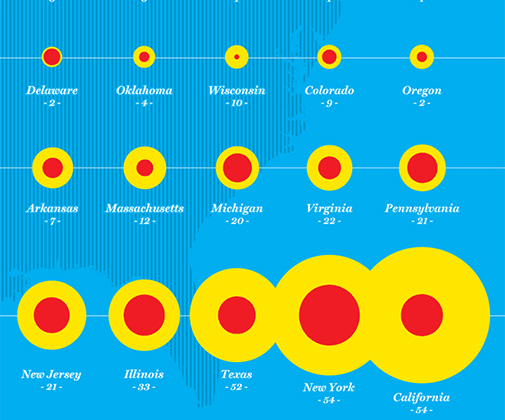
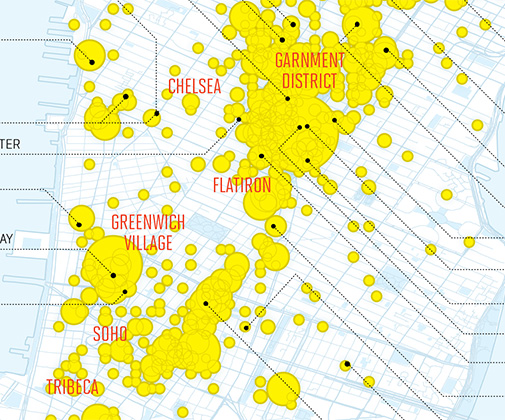
When Mayor Michael Bloomberg pledged to end New York’s overdependence on Wall Street, the city responded by becoming the country’s fastest-growing digital-technology hub. Despite less-than-stellar access to a reliable broadband network, New York now hosts over 1,800 tech companies. The city overtook Boston to become the country’s second-largest tech center, after Silicon Valley, this year. This map shows the Big Apple’s ecosystem of startups, venture capital firms, incubators, digital-media companies, and educational institutions.
In the latest issue of Fortune Magazine.
-
The Healing Machine
A Patent royalty is a beautiful thing. It is so much sweeter than found money because it is more than just good luck. It means that one party is paying another to use an invention. And before the lawyers got to arguing over claim constructions and prior art, before the government regulators and hospitals screamed enough was enough, and before the Russians came to Texas to explain Soviet-era library policies, there were few things more beautiful or lucrative in the world of patent royalties than the VAC.
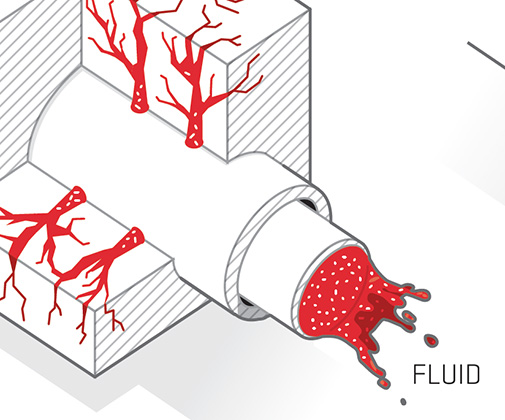
It’s pronounced “vack” and stands for vacuum-assisted closure. Here’s what it is: You cut a piece of foam to size and place it in a wound as a barrier and protector. Then you cover the wound and seal it up. One end of a tube goes through the seal and the other goes into a small pump. The pump produces negative pressure, creating an even vacuum through the foam, and the wound is pulled together and heals. If it sounds simple, it’s because it is simple.
For much of the past 20 years this device was controlled by a San Antonio company called Kinetic Concepts Inc. The VAC transformed KCI from a second-tier medical manufacturer into a global juggernaut.
For Wake Forest University, which licensed the VAC patents to KCI, the device has meant about $500 million in royalties. Based almost entirely on the VAC deal, the university was ranked fifth by the Association of University Technology Managers in its most recent survey of licensing income, trailing only Columbia, New York University, Northwestern, and the University of California system. In recent years the KCI payments have propped up the bottom line of the university’s medical center, and the VAC money has paid for research, recruiting, and construction that probably wouldn’t have happened otherwise.
As you might imagine, all that success gave KCI and Wake Forest a powerful incentive to build a fence, to protect the patents at all cost. And it gave everybody else an equally powerful incentive to find a way through the fence.In the latest issue of Fortune Magazine.
-
The Disappearing Desktop
LinkedIn recently asked more than 7,000 members of its professional network in 18 countries about which office supplies they see going the way of the dodo in the next five years. Topping the list was the tape recorder. Here are seven other habits and tools destined for extinction. In the latest issue of Fortune.
-
Can Apple win over China?
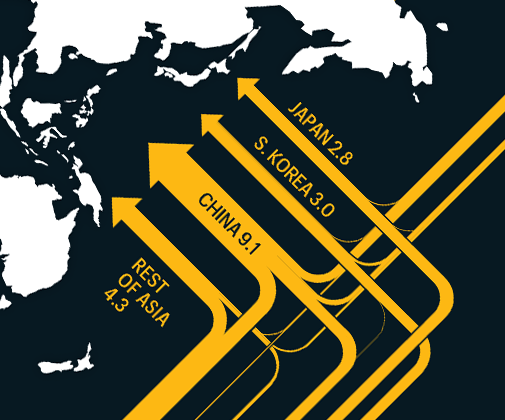
If you’re the world’s largest company—with nearly $600 billion in market value—getting bigger is a tough challenge. But if Apple can learn how to charm the world’s largest population, the possibilities are limitless.
Apple’s presence is stronger in the u.s. than china—for now. In the latest issue of Fortune Magazine.
-
Tenure at the Top
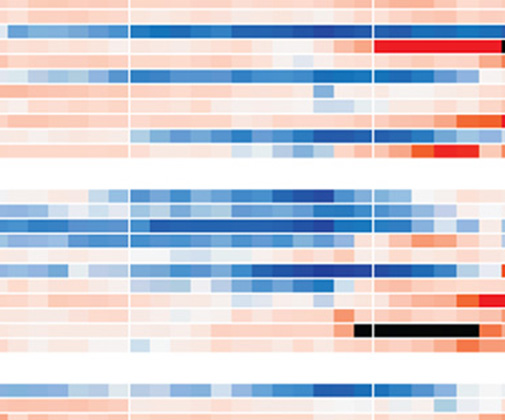
How long is too long (or too short) for a CEO to lead a company? A survey of CEO departures from 100 public companies locates the C-suite sweet spot.